What remains of an idea when the book that carried it disappears? What survives of a memory when the objects that preserved it lose their place in our lives?
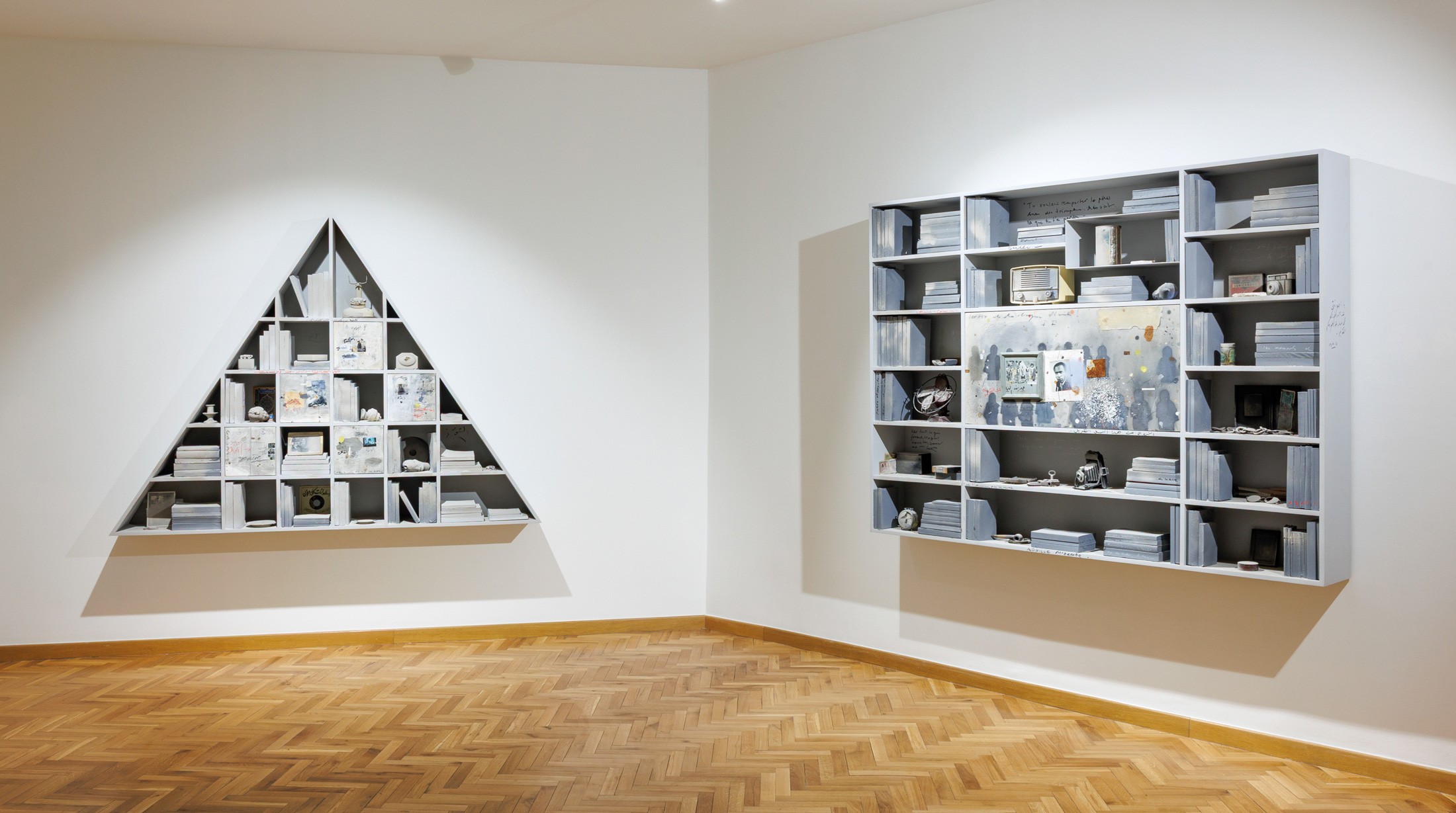
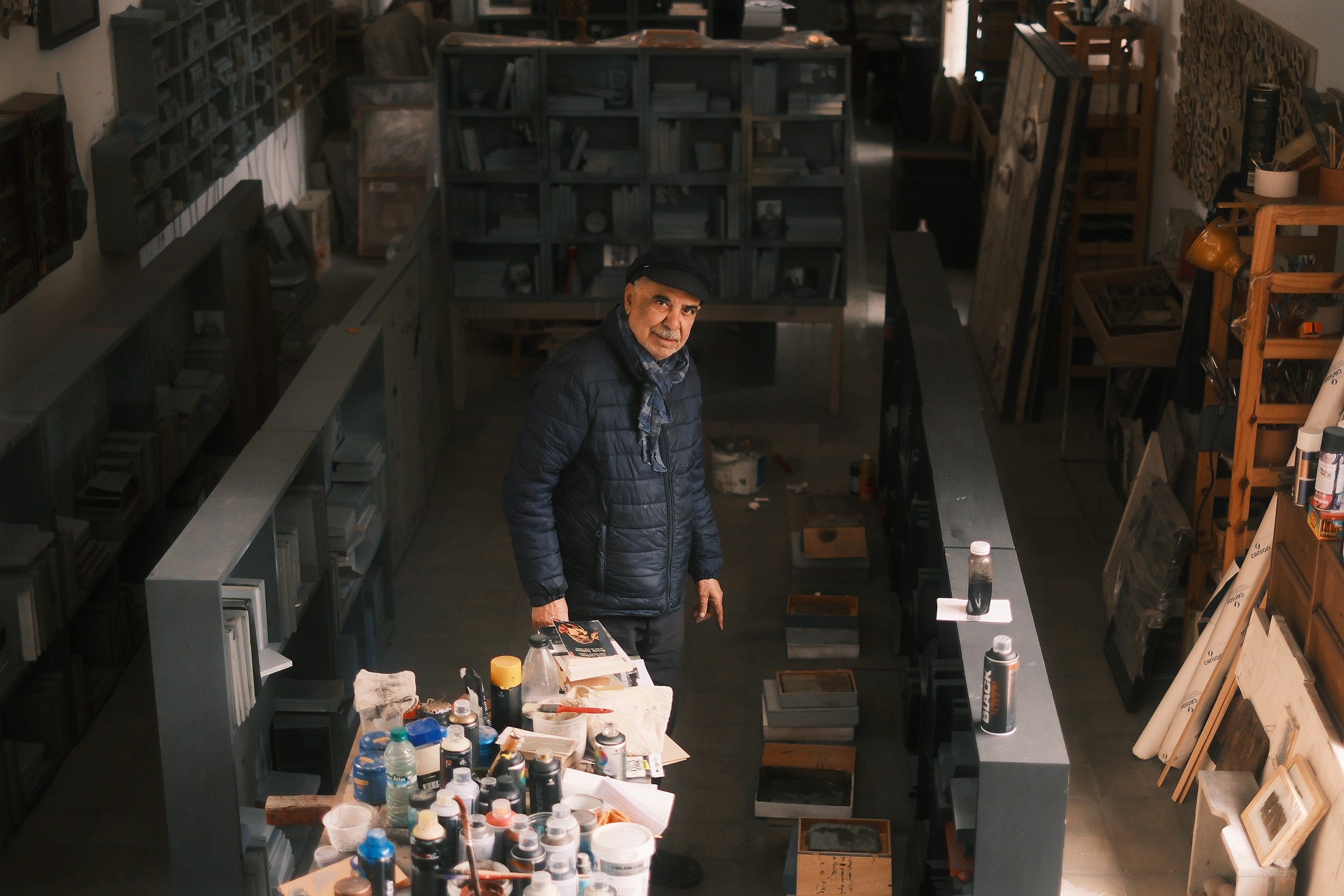
In Les sentiers de l’intranquillité, Hassan Bourkia approaches these questions through an artistic language shaped by literature, materiality and the enduring presence of history. Books, libraries and objects gathered over time become the substance of compositions in which intellectual legacies and personal memories intersect.
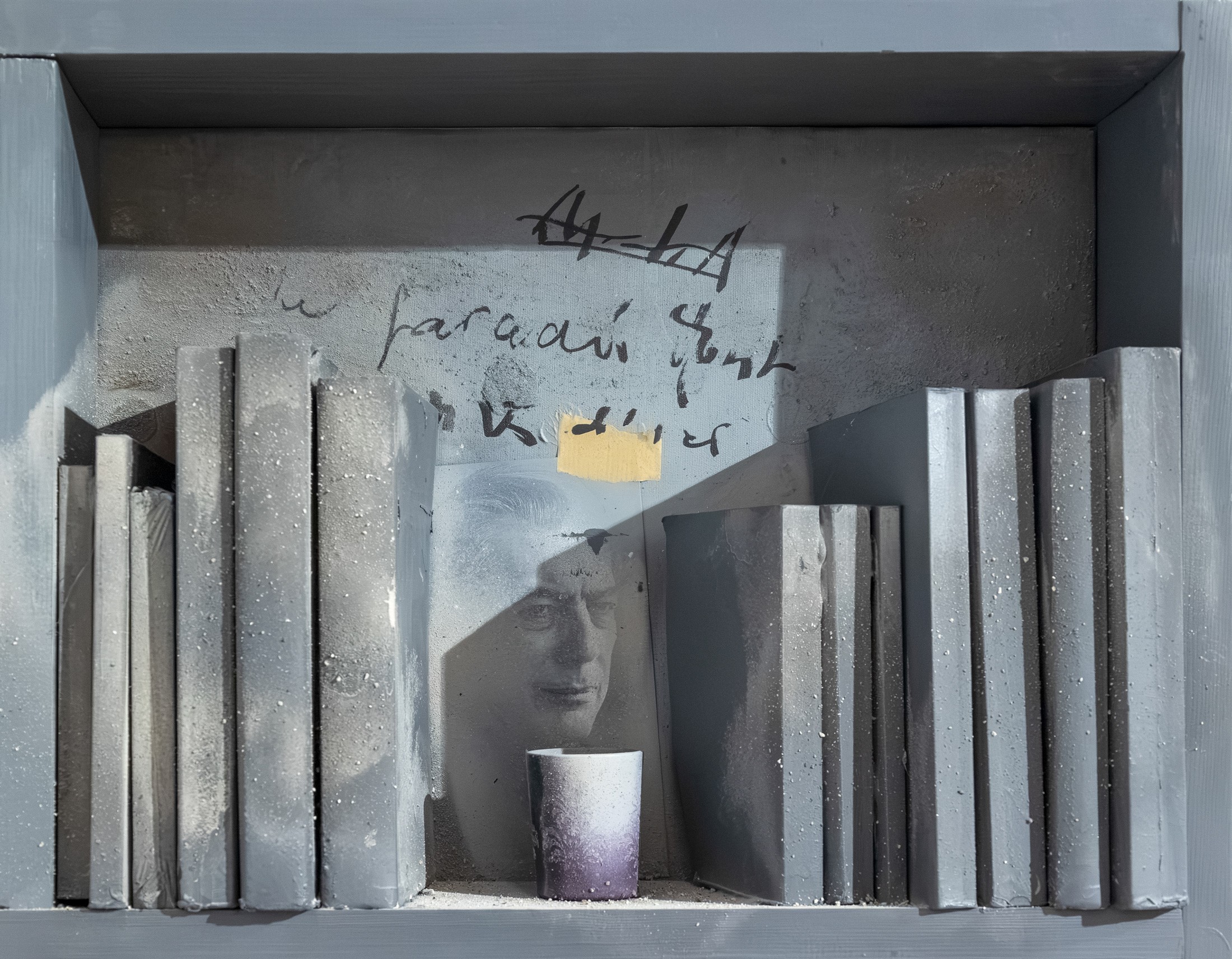
Literature has long been central to Bourkia’s practice. The writers whose lives and works inhabit his artistic universe have confronted the fractures of their times: exile, censorship, ideological conflict, violence and solitude. Their words, born of particular historical circumstances, continue to resonate beyond them. By bringing these literary voices into the physical realm of his work, Bourkia examines the persistence of thought and its capacity to resist oblivion.
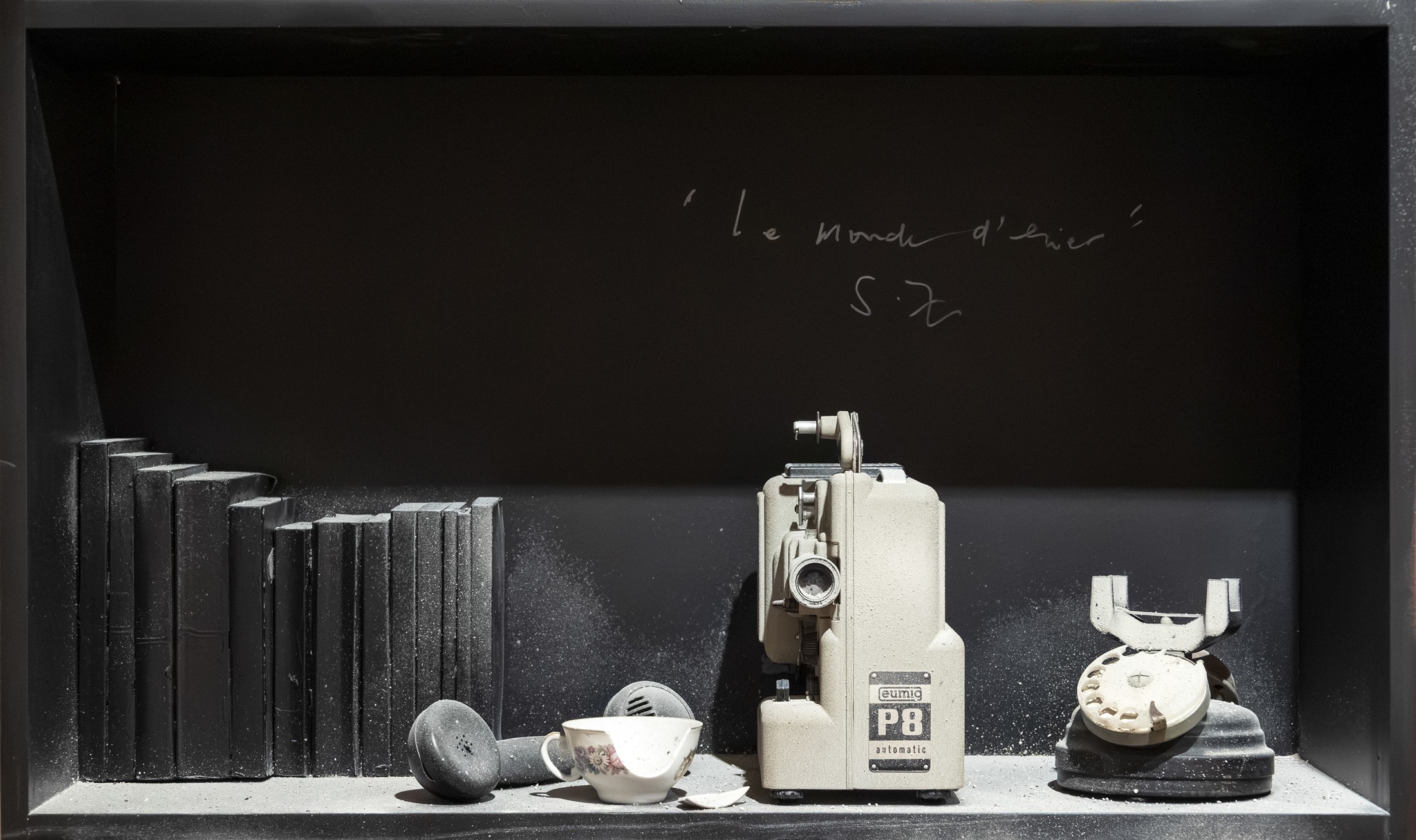
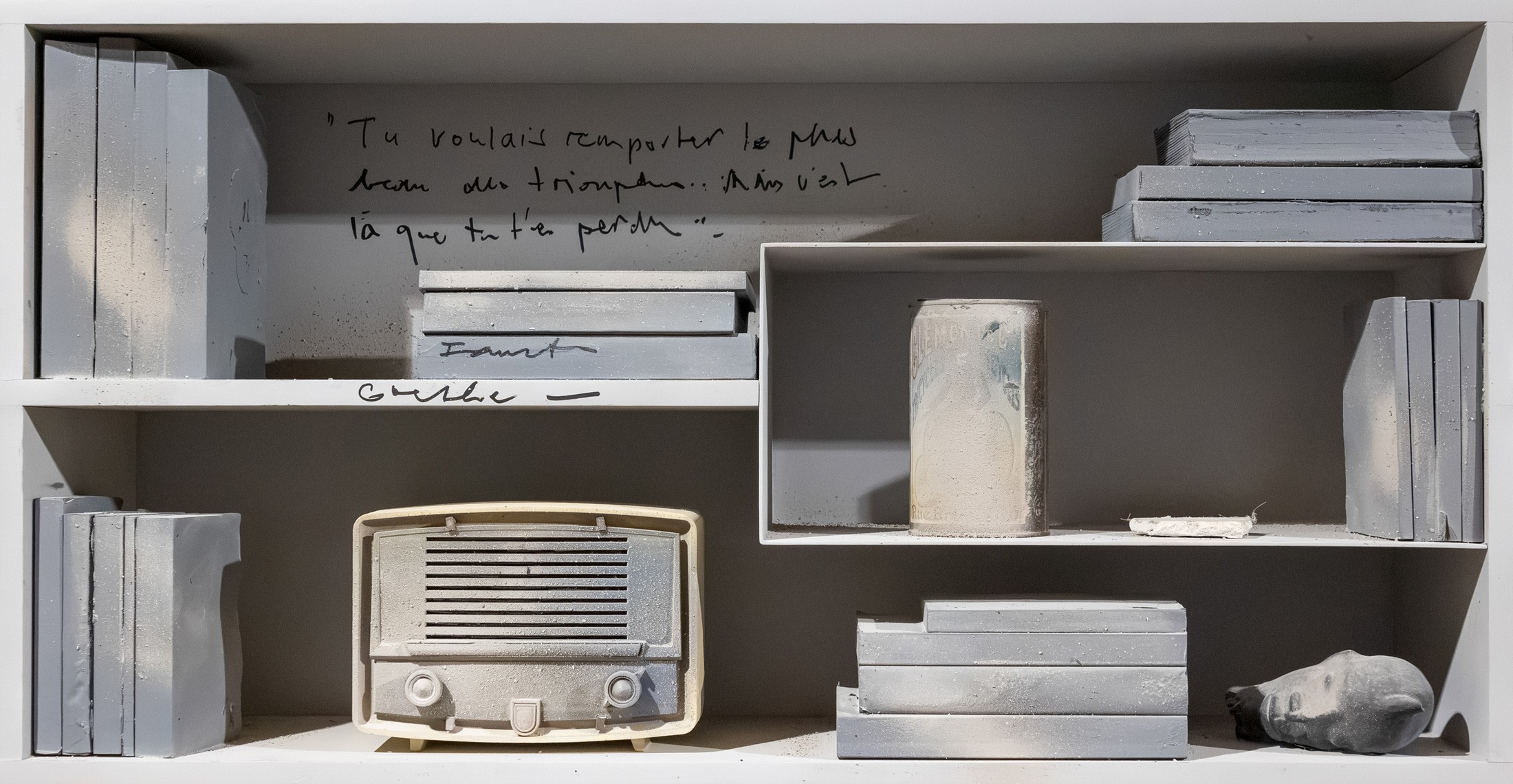
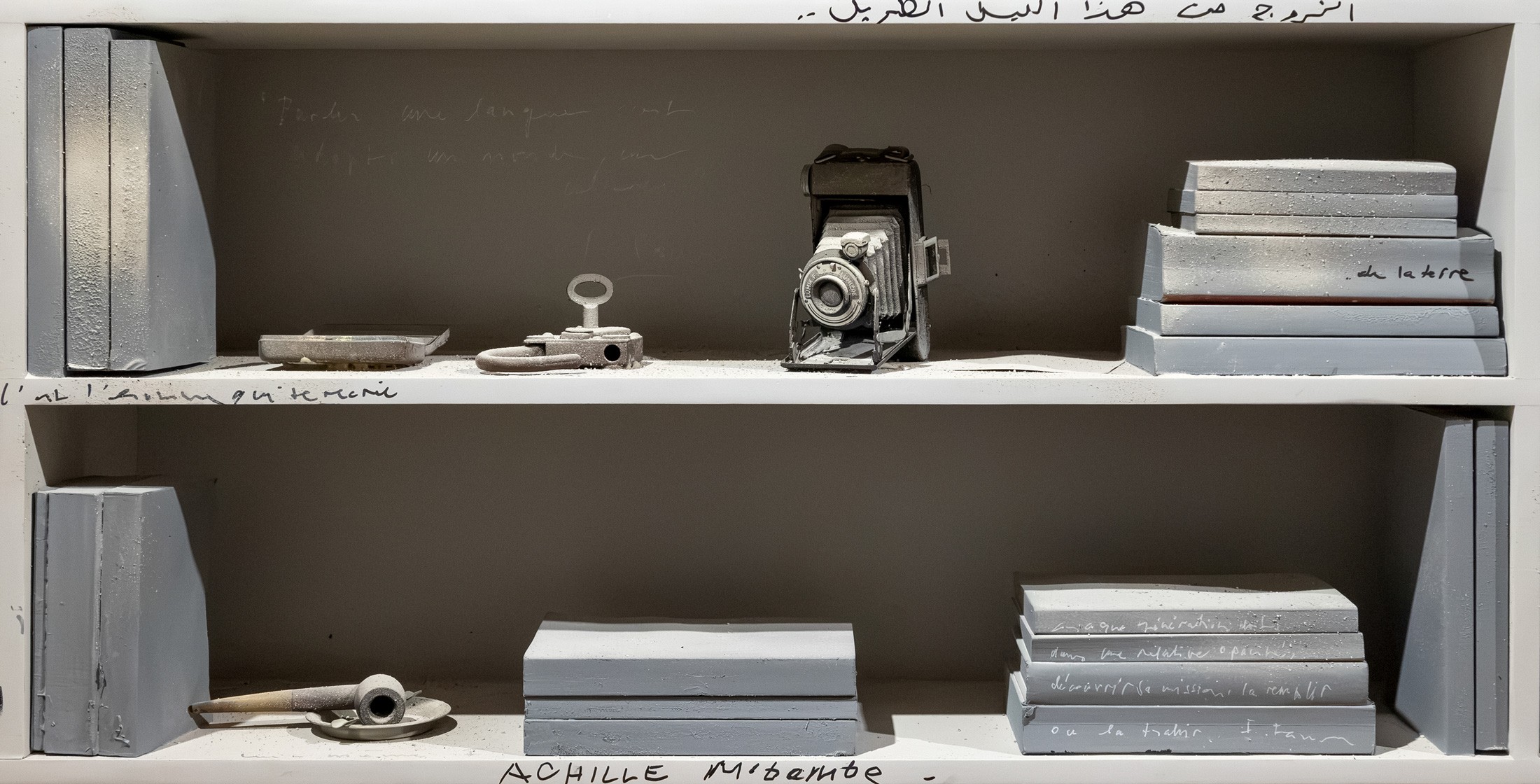
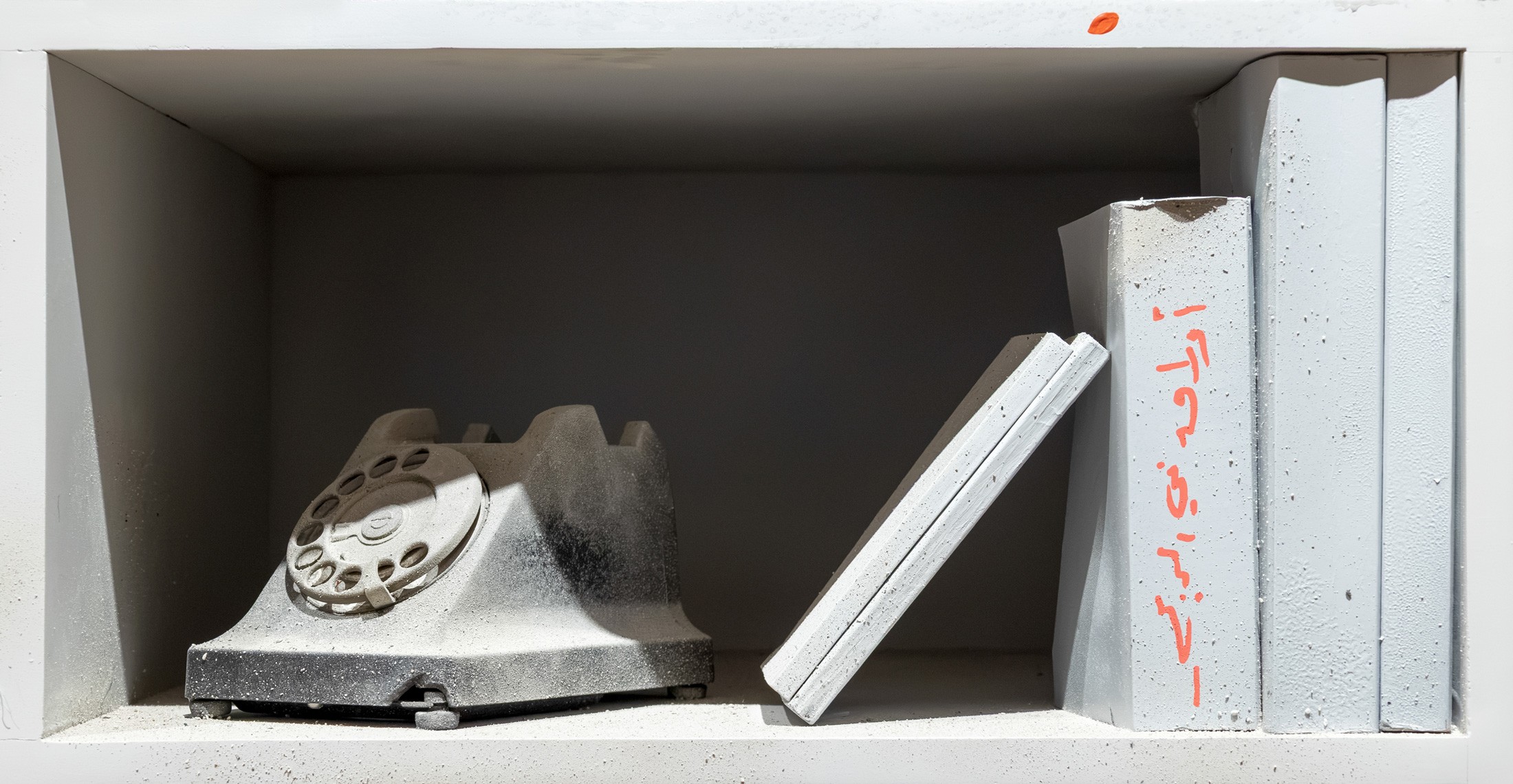
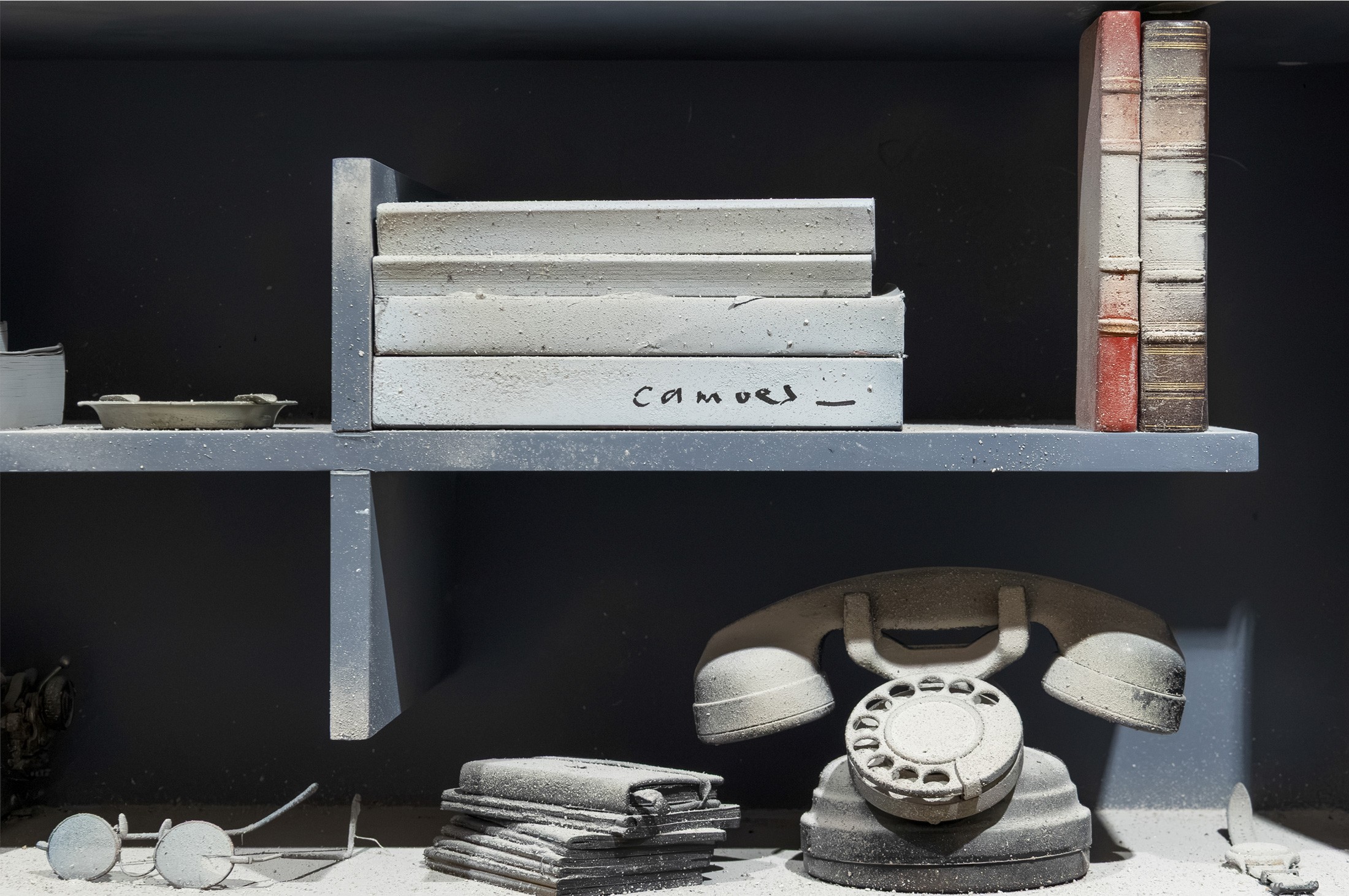
The library emerges as a defining figure within the exhibition. Once a familiar sanctuary of knowledge and intellectual exchange, it now stands at the intersection of preservation and obsolescence. Bourkia transforms it into a sculptural territory inhabited by books, typewriters, radios, cameras and other remnants of past lives. These objects evoke not only the intimate rituals of reading and writing, but also the means through which ideas have circulated, influenced societies and, at times, served the forces of power.
Within this universe, matter becomes a witness. Ashes recall the destruction of books and libraries, the violence of erasure and the vulnerability of cultural memory. Yet they also suggest what destruction cannot entirely extinguish: the trace of an existence, the imprint of a thought, the possibility of remembrance.
The restlessness evoked by the exhibition's title is therefore neither a passing emotion nor a purely personal condition. It reflects an enduring awareness of the world's contradictions, of histories that remain unresolved and of the responsibility to confront them.